
Cricket places dense advertising on boundary boards, rope segments, and pavilion fascias that broadcast packages revisit across overs. Sponsorlytix measured those assets under long-form coverage so brands see exposure across sessions, not only highlight reels.
Eagle Eye modelled the oval geometry and the way directors cut between bowler, batsman, and aerial packages. Brand Detection and Placement Detection attach over and innings metadata so a full day's ledger stays auditable.
Problem framing for rights holders and brands
A boundary board may sit in frame for an entire over on one camera and disappear for the next. Midwicket and straight-hit cameras show different board arcs. Pavilion fascias spike during presentations and team balconies. Rights holders sell session-aware inventory; brands expect the same.
Day-night fixtures add sight-screen whiteout and low-sun glare that naive detectors treat as strong exposure. Measurement must down-weight unreadable boards rather than credit them.
A full Test or multi-match franchise window produces more broadcast minutes than most football weekends. Sampling highlights understates pavilion inventory and overstates the boards that happened to sit behind viral sixes. Continuous measurement is the only honest answer.
- Boundary ellipse fitting defines board arcs against the ground map.
- Clock-position tags let commercial teams reconcile specific board slots.
- Scoring feeds supply over and innings keys for every exposure.
- Pavilion and rope inventory need separate asset classes from boundary boards.
Methodology — oval geometry and session metadata
Boundary ellipse fitting from sight-screen and rope cues defines board arcs. Detectors run along that arc and associate boards to clock positions on the ground map. Pavilion fascias use separate facade detectors. Session and over metadata from scoring feeds attach to every exposure.
Visibility scoring accounts for sight-screen whiteout and low sun glare common in day-night fixtures. HITL reviews contested board identity after creative rotations between sessions. Analytics factors (position, time, clarity, visibility, size, viewership) keep cricket on the same commercial grammar as football and tennis.
Placement Detection distinguishes boundary board slots from rope-adjacent marks and pavilion fascias so a celebration package that frames the rope does not silently steal credit from the contracted board arc. Brand Detection still owns identity; the ledger stores both.
When creative rotations happen between sessions — common in franchise leagues — ontology updates and a short HITL pass keep overnight board swaps from appearing as unexplained brand drops in morning reports.
Detection panels — perimeter boards on real stadium frames
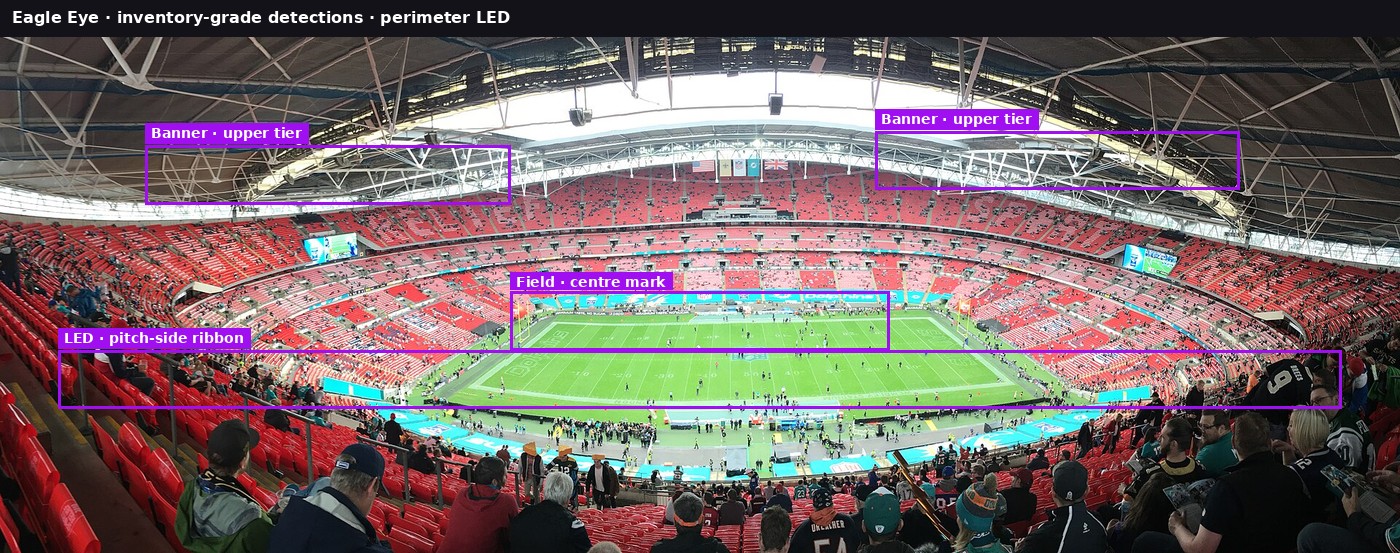
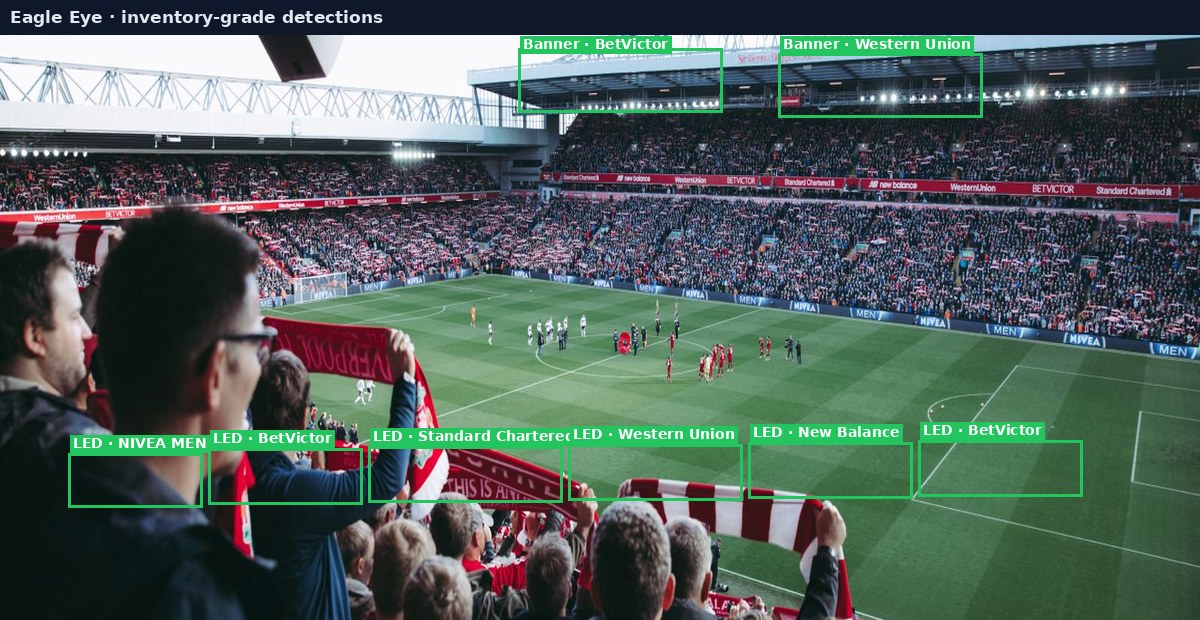
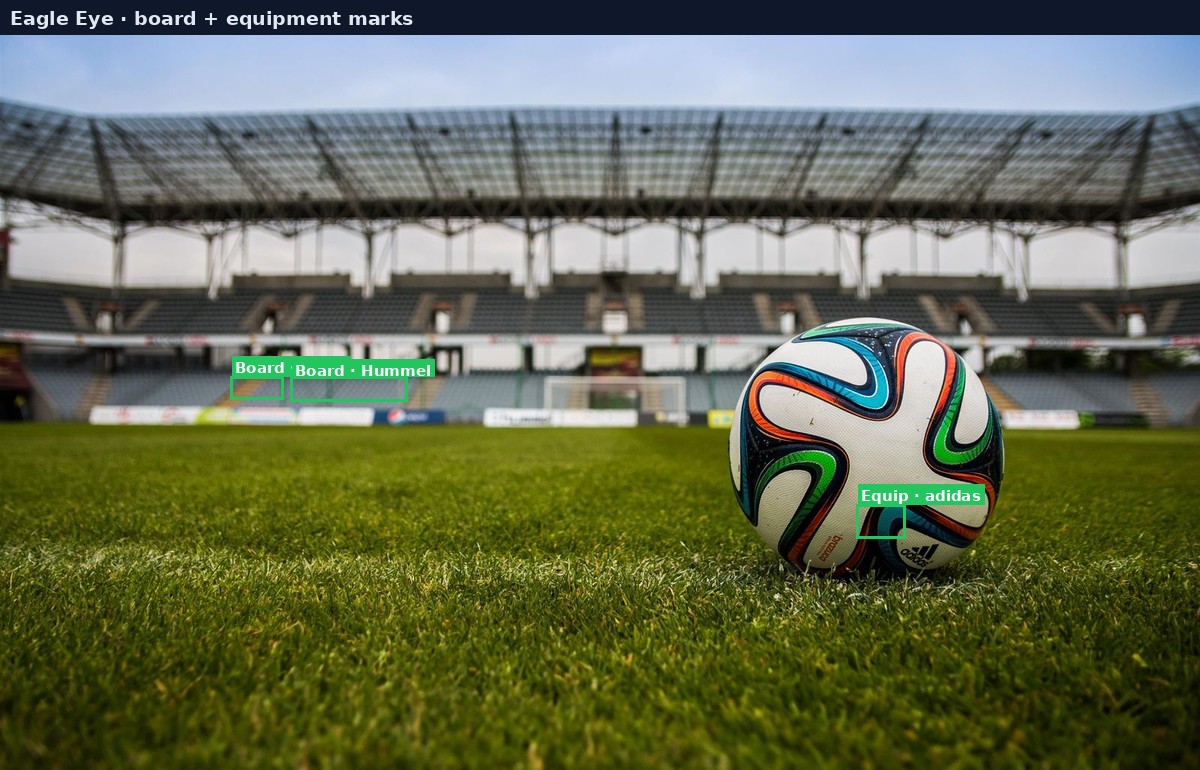
Real-world cricket examples
- Boundary boards behind the bowler during over-the-arm packages.
- Straight-hit boards framed on aerial and midwicket cuts.
- Rope-adjacent marks during boundary celebrations.
- Pavilion fascia brands during presentations and team balcony shots.
- Sight-screen adjacent boards that appear only on specific bowling ends.
Results discussion (illustrative)
Boundary boards dominate open-play packages. Pavilion inventory rises in ceremonial segments. Sponsorlytix separates those windows so cricket rights holders report fulfilment by session and package type.
Code — clock position and over tags
def tag_boundary_board(detection, ground_map, over_meta):
    angle = ground_map.clock_angle(detection.centroid)
    return {
        "brand_id": detection.brand_id,
        "clock_pos": round(angle / 30) * 30,  # nearest hour mark
        "innings": over_meta.innings,
        "over": over_meta.over,
        "session": over_meta.session,
        "visibility": detection.visibility,
        "clarity": detection.clarity,
    }

def glare_adjusted(visibility, glare_map, bbox):
    return visibility * (1.0 - glare_map.mean_in(bbox))
Takeaways
Cricket sponsorship measurement needs oval geometry, scoring metadata, and package-aware reporting. Sponsorlytix ships that stack so boundary and pavilion inventory stay auditable across long broadcast days.
Eagle Eye keeps every over on the same exposure timeline — ready for contract reconciliation and commercial review in Koba.